
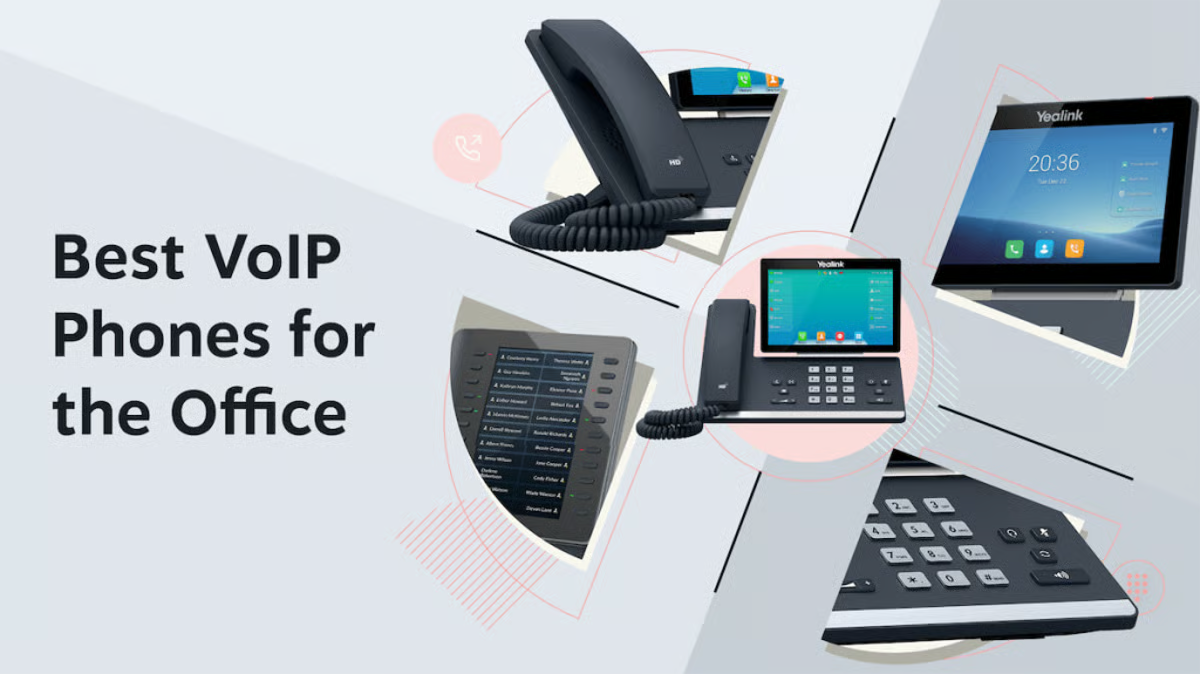
Traditional landline phone systems are rapidly disappearing as businesses move toward cloud-based communication solutions. Modern organizations need flexible, scalable, and cost-effective systems that support remote employees, hybrid teams, and global customers.
Voice over Internet Protocol (VoIP) technology has become the standard for business communications, allowing companies to make and receive calls through the internet while gaining access to advanced features such as call routing, video conferencing, team messaging, and AI-powered call analytics.
In this guide, we’ll compare the best VoIP phone systems for small businesses and remote teams in 2026, including pricing, features, pros, cons, and ideal use cases.
What Is a VoIP Phone System?
VoIP (Voice over Internet Protocol) is a technology that allows voice calls to be transmitted over the internet instead of traditional telephone networks.
Cybersecurity Risk Assessment: How Much Does It Cost in 2026?A business VoIP system typically includes:
- Business phone numbers
- Call forwarding
- Voicemail
- Auto attendants
- Call recording
- Team messaging
- Video meetings
- Mobile apps
- CRM integrations
- Analytics and reporting
Because VoIP operates in the cloud, employees can communicate from virtually anywhere with an internet connection.
Why Small Businesses Are Switching to VoIP
Traditional phone systems often come with:
- High setup costs
- Expensive hardware
- Limited flexibility
- Costly international calls
- Difficult maintenance
VoIP systems offer several advantages:
Best Business Internet Providers: Speed, Reliability, and Pricing Compared (2026 Guide)- Lower monthly costs
- Easy scalability
- Remote work support
- Advanced communication features
- Better customer service capabilities
- Simplified administration
For many small businesses, VoIP delivers enterprise-level functionality at a fraction of the cost.
Best VoIP Phone Systems for Small Businesses in 2026
1. RingCentral
Best Overall VoIP Phone System
RingCentral remains one of the most complete business communication platforms available.
It combines:
- VoIP calling
- Video conferencing
- Team messaging
- Contact center tools
- AI-powered communication features
Key Features
- Unlimited domestic calling
- Video meetings
- Team chat
- Auto attendant
- Call recording
- CRM integrations
- Mobile and desktop apps
- Analytics dashboards
Pros
- Comprehensive feature set
- Excellent reliability
- Strong integrations
- Scalable for growth
- Advanced administration tools
Cons
- Higher pricing than some competitors
- Advanced features require premium plans
Pricing
RingCentral plans typically start around:
How to Choose the Right Cloud Computing Provider for Your Business (2026 Guide)- $20–$35 per user/month
Best For
Businesses seeking a complete communications platform.
2. Nextiva
Best for Customer Experience
Nextiva combines business phone systems with customer communication and customer experience management tools.
Key Features
- VoIP calling
- Video meetings
- Team collaboration
- Customer interaction management
- Call routing
- Voicemail transcription
- CRM integrations
- Analytics
Pros
- Excellent customer support
- User-friendly platform
- Strong reliability
- Good scalability
Cons
- Some advanced capabilities require higher-tier plans
Pricing
Generally:
- $25–$40 per user/month
Best For
Customer-focused businesses that prioritize service quality.
Best Password Managers for Businesses and Enterprise Teams (2026 Guide)3. Zoom Phone
Best for Remote and Hybrid Teams
Following the success of Zoom Meetings, Zoom Phone has become a leading cloud phone solution.
Key Features
- Business calling
- Video conferencing
- Team messaging
- Call queues
- Auto attendants
- Voicemail
- Global phone coverage
- Mobile access
Pros
- Familiar interface
- Strong video integration
- Easy deployment
- Excellent for distributed teams
Cons
- Fewer contact center features than some competitors
Pricing
Typically:
- $10–$25 per user/month
Best For
Remote and hybrid work environments.
4. 8×8
Best for International Businesses
8×8 offers strong global communication capabilities and competitive international calling options.
Key Features
- Global calling
- Video meetings
- Team messaging
- Contact center features
- Analytics
- Call recording
- Multi-country support
Pros
- Excellent international coverage
- Strong analytics
- Unified communications platform
- Good value
Cons
- Interface can feel less intuitive for new users
Pricing
Custom pricing based on plan requirements.
Best For
Businesses with international teams or customers.
5. Vonage Business Communications
Best for Flexibility
Vonage provides customizable communication solutions suitable for businesses with unique requirements.
Key Features
- Business VoIP
- Team messaging
- Video meetings
- API integrations
- Mobile applications
- CRM connectivity
- Call management tools
Pros
- Flexible configurations
- Strong integration ecosystem
- Reliable infrastructure
- Scalable architecture
Cons
- Pricing can increase with add-ons
Pricing
Generally:
- $20–$40 per user/month
Best For
Businesses requiring customized communication workflows.
6. Dialpad
Best AI-Powered VoIP Platform
Dialpad differentiates itself through advanced artificial intelligence features.
Key Features
- AI call transcription
- Real-time coaching
- Sentiment analysis
- Business calling
- Video meetings
- Team messaging
- CRM integrations
Pros
- Excellent AI capabilities
- Modern user interface
- Strong mobile experience
- Good value
Cons
- Some AI features require premium plans
Pricing
Typically:
- $15–$35 per user/month
Best For
Businesses seeking AI-enhanced communications.
VoIP Pricing Comparison
| Provider | Starting Price | Best For |
|---|---|---|
| RingCentral | $20–$35/user/month | Overall business communications |
| Nextiva | $25–$40/user/month | Customer experience |
| Zoom Phone | $10–$25/user/month | Remote teams |
| 8×8 | Custom | International businesses |
| Vonage | $20–$40/user/month | Flexible deployments |
| Dialpad | $15–$35/user/month | AI-powered communications |
Essential VoIP Features for Small Businesses
Not all VoIP platforms offer the same functionality.
The following features provide the greatest business value.
Auto Attendant
An auto attendant automatically answers incoming calls and routes callers to the appropriate department.
Benefits include:
- Professional image
- Reduced receptionist workload
- Faster call routing
Call Forwarding
Remote employees can receive calls on:
- Smartphones
- Laptops
- Home office phones
- Multiple devices simultaneously
This ensures business continuity regardless of location.
Voicemail Transcription
Voicemail transcription converts voice messages into text.
Advantages include:
- Faster response times
- Improved accessibility
- Easier message management
Many modern VoIP providers now include AI-powered transcription.
Video Conferencing
Integrated video meetings eliminate the need for separate conferencing software.
Benefits include:
- Reduced software costs
- Better collaboration
- Simplified workflows
Mobile Applications
Mobile apps allow employees to use business phone numbers from their smartphones.
This feature is particularly valuable for:
- Sales teams
- Remote workers
- Field service employees
- Executives
CRM Integration
CRM integrations connect communication data with customer records.
Popular integrations include:
- Salesforce
- HubSpot
- Zoho CRM
- Microsoft Dynamics
- Pipedrive
This improves customer visibility and sales productivity.
VoIP Security Considerations
Communication security is increasingly important.
Look for providers offering:
Encryption
Encryption protects calls and messages from interception.
Common standards include:
- TLS
- SRTP
- AES encryption
Multi-Factor Authentication (MFA)
MFA helps secure user accounts from unauthorized access.
Compliance Support
Depending on your industry, you may require support for:
- HIPAA
- GDPR
- PCI DSS
- SOC 2
Always verify compliance capabilities before choosing a provider.
VoIP vs Traditional Phone Systems
Traditional Phone Systems
Advantages:
- Familiar technology
- Independent of internet connectivity
Disadvantages:
- Expensive infrastructure
- Limited flexibility
- Higher maintenance costs
- Poor remote work support
VoIP Systems
Advantages:
- Lower costs
- Greater flexibility
- Remote access
- Advanced features
- Easy scalability
Disadvantages:
- Dependence on internet quality
- Potential call quality issues with poor connections
For most businesses in 2026, VoIP offers significantly greater value.
Best VoIP System by Business Type
Best Overall
RingCentral
Ideal for businesses needing an all-in-one communication platform.
Best for Remote Teams
Zoom Phone
Excellent for organizations already using Zoom Meetings.
Best Customer Service Platform
Nextiva
Strong customer communication capabilities.
Best International Solution
8×8
Outstanding global calling support.
Best AI Features
Dialpad
Advanced transcription and real-time intelligence.
Best Customization
Vonage
Flexible platform with extensive integrations.
How to Choose the Right VoIP Provider
Before making a decision, consider:
Team Size
Some providers become more cost-effective at larger scales.
Remote Work Requirements
Prioritize mobile apps and collaboration features.
International Calling Needs
Evaluate global coverage and international pricing.
CRM Integration
Ensure compatibility with existing business software.
Budget
Consider total monthly costs, including add-ons and advanced features.
Security Requirements
Verify encryption, compliance, and authentication capabilities.
ROI of Switching to VoIP
Many businesses achieve significant returns after migrating from traditional phone systems.
Potential benefits include:
- Reduced communication costs
- Improved employee productivity
- Better customer service
- Increased flexibility
- Simplified IT management
- Enhanced collaboration
The ROI often becomes even greater as remote and hybrid work models expand.
Final Thoughts
VoIP technology has transformed business communications, providing affordable, flexible, and feature-rich alternatives to traditional phone systems.
For most small businesses, RingCentral offers the best overall combination of calling, messaging, video conferencing, and scalability. Zoom Phone is particularly attractive for remote teams, while Nextiva excels in customer-focused environments. Businesses with international operations should consider 8×8, and organizations interested in AI-powered communication tools may find Dialpad especially valuable.
The best VoIP phone system is the one that aligns with your team’s communication needs, growth plans, and budget. By choosing the right platform, businesses can improve collaboration, enhance customer service, and support remote work while reducing overall communication costs.